
Sumter County Arrest Records and Charges
Arrest records are created by the agency that takes a person into custody. They may identify the arrested person, agency, date, initial allegation, booking status, and bond information available at that point. Sheriff Brian S. Harris is the direct county contact at 118 Hospital Drive, Livingston, AL 35470, phone (205) 652-7984. No official Sumter County, Alabama online jail roster or arrest blotter was found.
Formal court charges are kept in the Criminal division of Circuit Clerk Devon A. James after a court case opens. The prosecutor chooses whether and how an allegation proceeds. The charge record can show the charging paper, statute, count, classification, bond, case number, court, and next setting. The full Sumter County criminal case file later adds pleas, motions, judgment, disposition, and sentence.
The official Sumter County Sheriff and jail page identifies the local law-enforcement office.
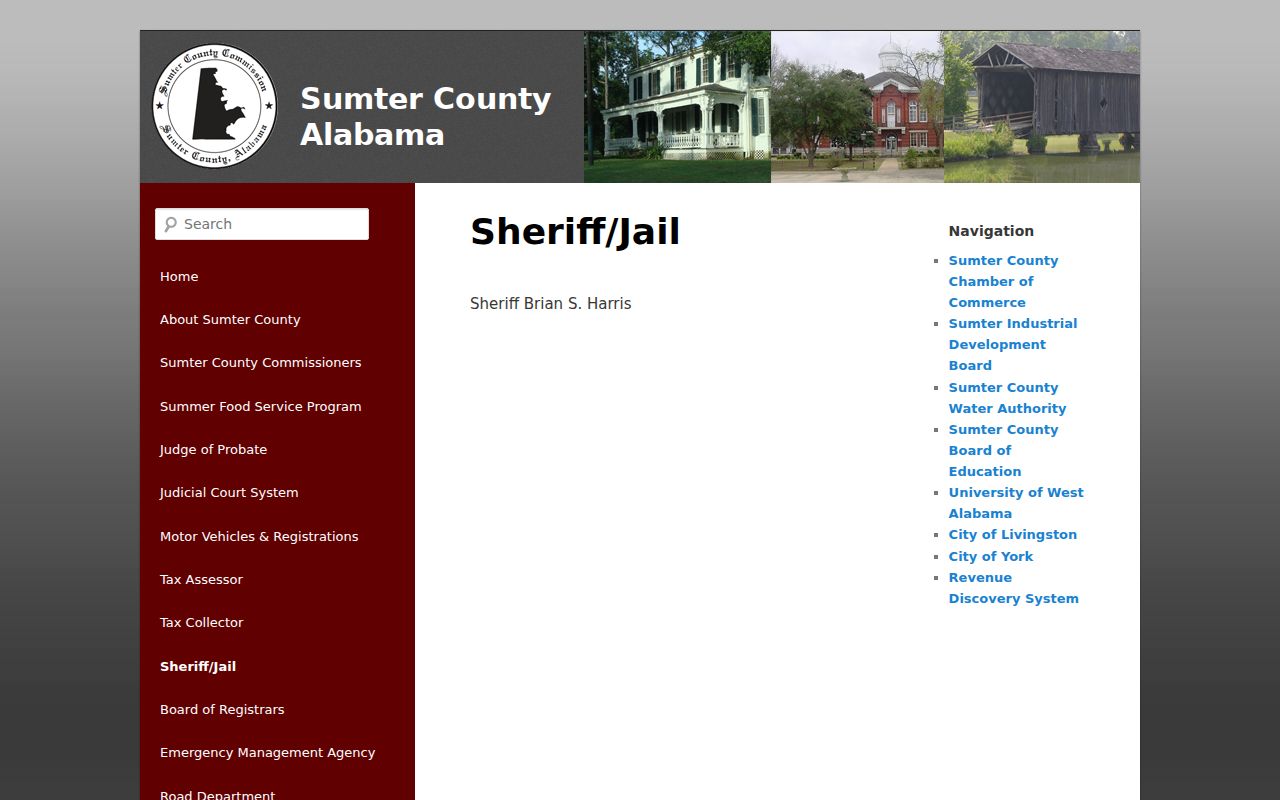
Its limited online detail makes phone, in-person, mail, and records-request channels essential for local booking information.
Find Sumter Arrest Records and Charges
Use the record keeper tied to the stage. Ask the Sheriff for booking, current local custody, or law-enforcement records. Use Alacourt Access or Just One Look for the filed Circuit or District Court case. Contact the Circuit Clerk at 115 Franklin St., Livingston, (205) 652-2291, for old files, certified copies, missing results, and details not offered online. Mail requests go to PO Box 936.
- Identify whether the request concerns booking or a filed court charge.
- For booking, contact the Sheriff with the name and approximate arrest date.
- For court charges, search Alacourt by case number or defendant name.
- Match the court, count, statute, charge description, bond, and case status.
- Read the final disposition before describing any allegation as a conviction.
ALEA online services lists Alabama criminal-history and related official services. An ALEA history is different from the Sumter County court case. It may serve a different purpose and should not replace a certified clerk record when the exact filed charge and outcome matter.
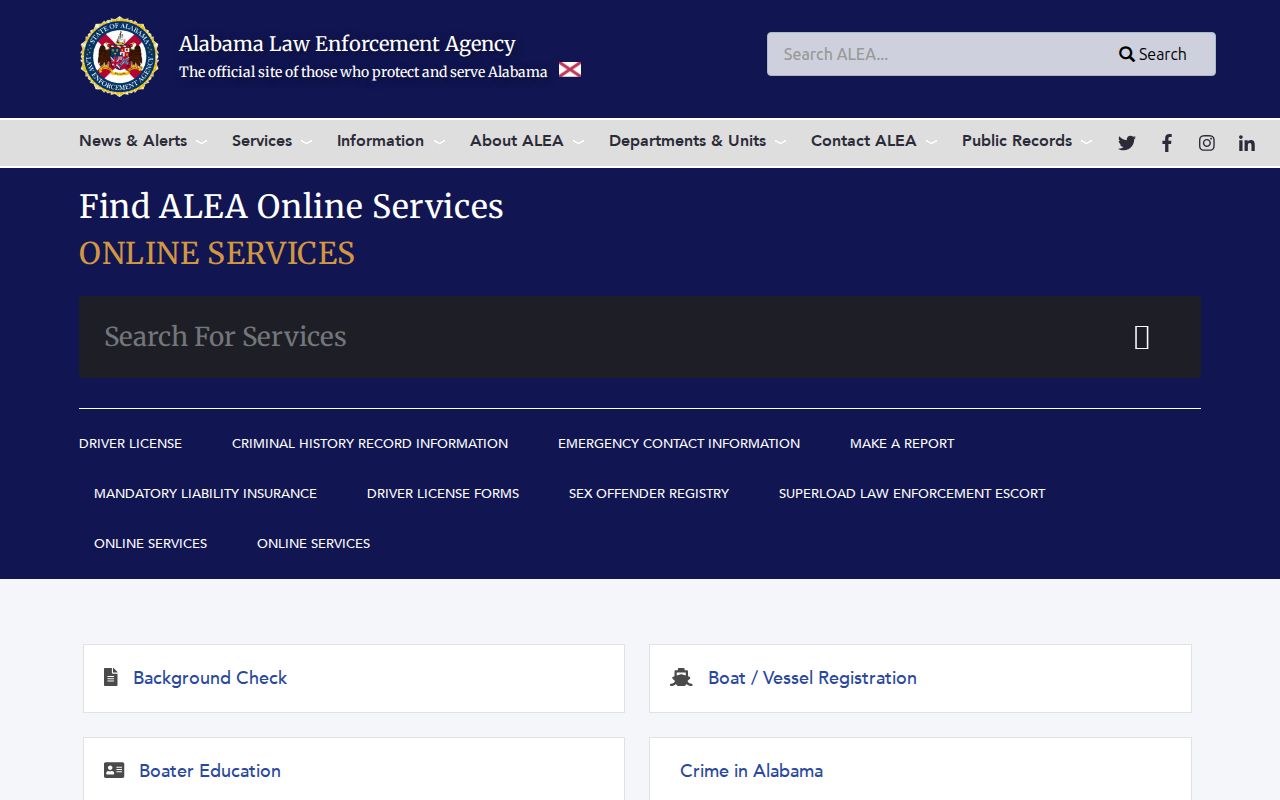
The state services index helps users select criminal-history access without mistaking it for a county arrest roster.
Sumter Charging Documents After Arrest
A court charge begins through a recognized charging document, not merely because an arrest record lists an officer's first allegation. A complaint states facts and an offense at the early stage. An information is a formal prosecutor-filed accusation where allowed. An indictment is returned by a grand jury, commonly in felony proceedings. The exact document in a Sumter County case must be read with its later docket because charges can change.
| Complaint | Information | Indictment | |
|---|---|---|---|
| Source | Officer or prosecutor | Prosecutor | Grand jury |
| Function | States the alleged facts and offense | States formal prosecutor-filed counts | States counts returned by the grand jury |
| Where tracked | Court case and docket | Court case and docket | Circuit Court case and docket |
Sumter Court Charge Status
Each count can move on its own. An early arrest allegation may never become a filed count. A filed count may be amended to correct or change the allegation, reduced to a different level, dismissed by the court, or set aside when the prosecutor chooses not to proceed. Searchers should record both the original description and current status with a date.
| Status | What It Means |
|---|---|
| Pending | The court has not entered a final result on that count. |
| Amended | The filed accusation was changed; read the later count description. |
| Reduced | The case proceeds on a less severe or different charge. |
| Dismissed | The count ended without a conviction on that charge. |
| Nolle prosequi | The prosecutor elected not to proceed at that time. |
| Disposed | A result was entered; inspect the disposition for each count. |
Sumter Charges Versus Convictions
Being arrested or charged is not a finding of guilt. A conviction requires a guilty plea or finding. One arrest may produce several counts, and each can end differently. Check the plea, judgment, and disposition rather than relying on a booking label or the first charge listed.
| Charge | Conviction | |
|---|---|---|
| Stage | Accusation | Verdict or plea |
| Meaning | Accusation filed for court action | Guilty plea or finding |
| May change | Can be amended, reduced, dismissed, or dropped | Can be appealed or affected by later relief |
| Best proof | Charging document and docket | Disposition and judgment |
Sealed and Expunged Arrest Records
A sealed file is hidden from ordinary public view under law or court order. Expungement is a separate Alabama petition process for eligible records. It can restrict the arrest and court record from normal public access after an order. A dismissal does not by itself prove that an expungement occurred.
- Sealed
- Public view is restricted by law, rule, or court order, though authorized access may remain.
- Expunged
- An eligible record is removed from normal public access after a petition, notice process, and court order.
- Dismissed
- The charge ended without a conviction, but the public case entry may remain unless a separate access restriction applies.
Read Sumter Charge Codes
A filed charge may show an offense name, Alabama Code section, degree or classification, count number, and court. A felony generally proceeds in Circuit Court after indictment or transfer. District Court handles misdemeanors within its jurisdiction and preliminary felony matters. Never infer severity from a short label alone. Match the text to the statute and later amended count. One arrest can produce several codes, separate bond terms, and different outcomes.
Statewide Alabama Record Channels
ALEA provides state criminal-history services, while Alacourt provides court case access. The National Sex Offender Public Website is a separate official search for registration information and is not a general arrest or criminal case database.
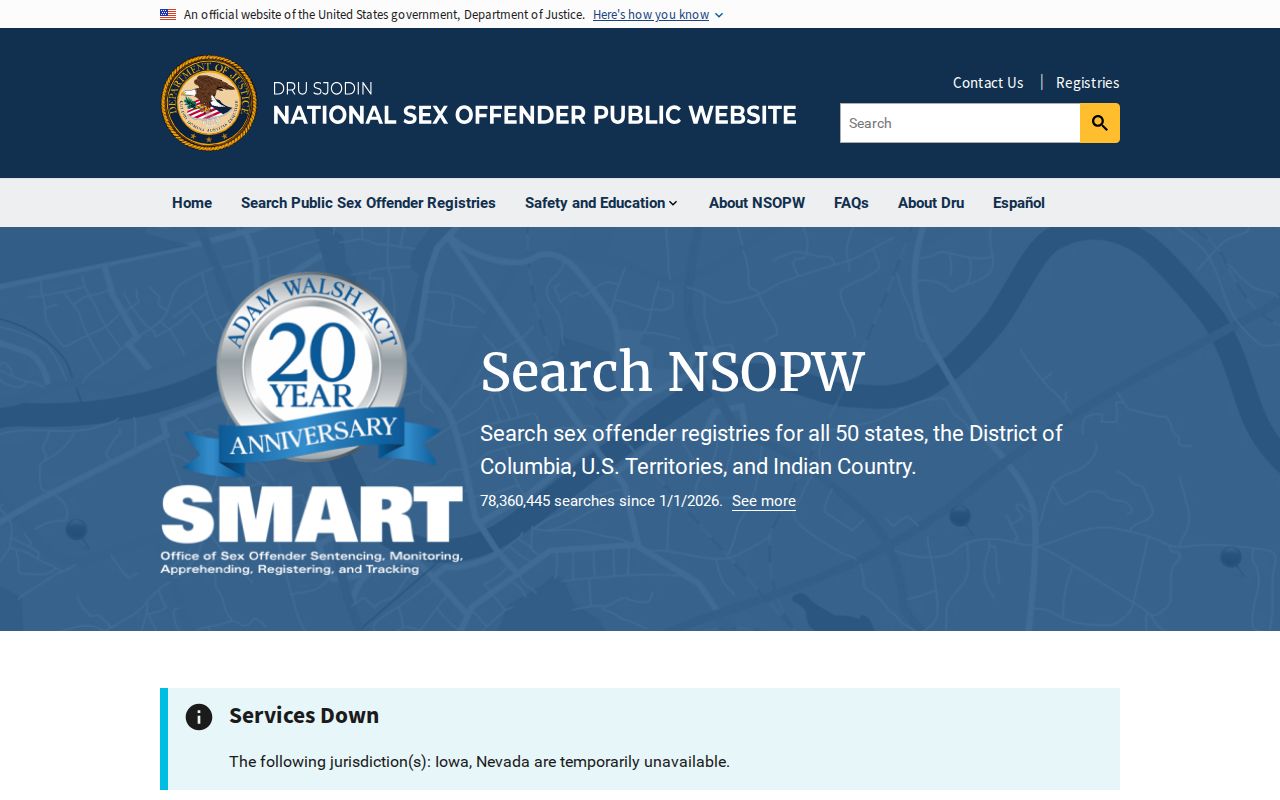
Registration records should not be described as a full list of Sumter County arrests, charges, or convictions.
For municipal charges, Livingston Municipal Court handles its city matters and meets every first Tuesday at 101 Country Club Road. Citation questions go to Rhonda Bibbs at 205-652-2505. York police and municipal questions use 205-392-5261. State court charges remain with the Circuit Clerk and Alacourt.
Verify Sumter Arrest Record Matches
Names can match more than one person. Confirm the agency, court, case number, filing date, charge count, and disposition. An arrest record may be incomplete without the later court result. A court record may not supply every booking fact. Neither should be used as a consumer report for employment, housing, credit, insurance, or another FCRA-regulated decision unless obtained through an authorized reporting process.
Important: Verify each result with the Sheriff or Circuit Clerk and use an authorized consumer reporting agency for regulated decisions.
Restricted Sumter Charge Records
Juvenile charges are confidential under Alabama Code Section 12-15-133. Sealed warrants, active-investigation material, medical information, safety-sensitive jail details, protected addresses, Social Security numbers, financial accounts, and minor identifiers may also be withheld or redacted.
Alabama expungement laws in Section 15-27-1 and Section 15-27-2 control eligibility for specified records. The Circuit Clerk can explain filing procedure but cannot decide eligibility or give legal advice. No official Sumter public defender office page was found, so appointed-counsel requests should go through the assigned court.
Warrant information follows another split. The Circuit Clerk lists Warrants as a record division, while the Sheriff handles law-enforcement questions. No official public Sumter County active-warrant list or statewide Alabama warrant database for ordinary users was found. Alacourt may show a public case-level warrant event, but sealed warrants and active investigations may not appear. A person with a known warrant should call the issuing court or Sheriff before appearing.
Traffic failure to appear is a documented local charge pathway. The Sumter District Court traffic page warns that a person who neither resolves a payable case nor appears as required may face a warrant, ALEA license suspension, a higher fine, and bond forfeiture. Municipal warrants use the issuing city court instead. Livingston questions go to its municipal channel, while York questions begin with the city police dispatch number.
A strong records request separates facts from assumptions. Give the full name, approximate arrest date, agency, court case number if known, and exact item sought. Ask the Sheriff for booking or incident material. Ask the Circuit Clerk for the filed charge, docket, disposition, or certified court paper. This division reduces false matches and helps reveal whether the arrest allegation changed before court.
Keep a copy of the request and note the office contacted. If one office does not hold the record, ask which issuing agency or court does.
District Attorney Racheal England serves the 17th Judicial Circuit, which includes Sumter, Greene, and Marengo counties. The official county judicial listing places the office at the Marengo County Courthouse in Linden, Alabama, with phone (334) 295-2219. The prosecutor decides whether formal charges proceed, how counts are framed, and whether plea negotiations or later charge changes occur. The District Attorney is not the keeper of the public court file, so filed documents and certified copies still come from the Circuit Clerk.
Bond data should also be read with care. A booking record may show an early bond amount or custody status. A court record can later show a bond order, changed conditions, forfeiture, or release terms. Bond does not prove guilt. It is meant to secure appearance and compliance while the charge is pending. If the record shows no-bond status or unclear terms, confirm the current order with the court rather than relying on an old booking entry.
Public-records access has limits. Alabama Code Section 36-12-40 supplies the general public access framework, and Section 36-12-41 addresses copies and lawful charges. Those laws do not override a seal, juvenile confidentiality, protected personal data, or an active-investigation restriction. When a public online result stops at a case shell, request the needed document from the office that created or keeps it.