
Sumter County Criminal Court Records
The Criminal division of Circuit Clerk Devon A. James keeps Sumter County criminal case files for Circuit and District Court. The file grows as the case moves. It may begin with a complaint, warrant, indictment, or other charging paper and later add bond orders, hearing entries, plea documents, motions, a judgment, sentence, probation terms, restitution, fines, and costs. The docket gives the sequence, while filed documents give the detail.
Circuit Court handles felony prosecutions under Alabama's general trial court structure. District Court handles misdemeanors within its jurisdiction and preliminary felony proceedings. The District Court record may show an initial appearance, bond, or preliminary hearing before a felony moves to Circuit Court. Municipal ordinance cases remain with the city court unless appealed. The Sumter County arrest records and charge pathway provides the narrower view of allegations before the whole case develops.
The Circuit Court jurisdiction statute is the official source for that court's criminal role.
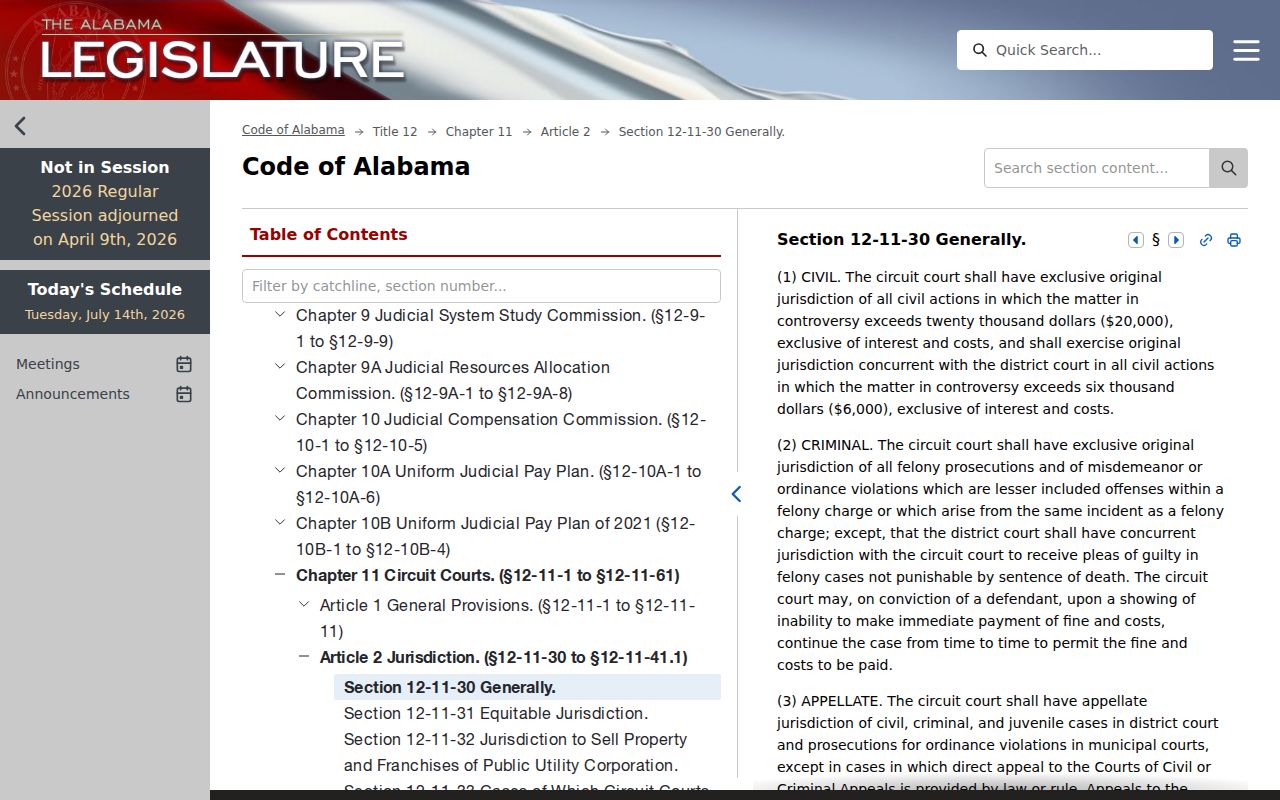
It supports the route of felony matters into Circuit Court rather than treating every arrest as one final court record.
Search Sumter Criminal Court Records
Start with Alacourt Access or Just One Look, the official statewide Alabama trial court record portal named by the Sumter County Circuit Clerk. Search by case number when known or by the defendant's name. Confirm Sumter County, court level, criminal case type, and party before opening details. Fees or an account may apply. Full documents may require added payment or an offline request.
- Open Alacourt and select the Sumter County case route.
- Enter the criminal case number, or use the defendant's name.
- Match the court, party, filing period, and case type.
- Read charges with the plea, docket, disposition, and sentence.
- Request a certified copy from the Circuit Clerk when required.
For old, absent, or copy-specific material, contact the Circuit Clerk at 115 Franklin St., Livingston, AL 35470, (205) 652-2291, Monday through Friday from 8:00 a.m. to 5:00 p.m. Mail goes to PO Box 936. An ALEA criminal-history product is separate from the clerk's case file and should not replace reading the actual court disposition.
Sumter Criminal Case Stages
Each stage can add a record entry. Charges state the allegation. Arraignment records notice and plea. Pretrial events can include discovery issues, motions, bond review, and hearing settings. A plea or trial resolves the question of guilt. Disposition records the result of each count, and sentencing states the punishment or terms ordered by the judge.
Case flow: Charges Filed › Arraignment › Pretrial / Motions › Plea or Trial › Disposition › Sentencing
- Charges filed: A complaint, information, or indictment states each alleged offense.
- Arraignment: The defendant is advised of the charge and enters a plea.
- Pretrial and motions: Parties file requests and the judge enters rulings or settings.
- Plea or trial: A plea or fact finder determines the outcome.
- Disposition: Each charge is marked guilty, not guilty, dismissed, or otherwise resolved.
- Sentencing: The order states custody, probation, restitution, fines, costs, or other terms.
The District Court criminal jurisdiction statute describes misdemeanor and preliminary felony authority.
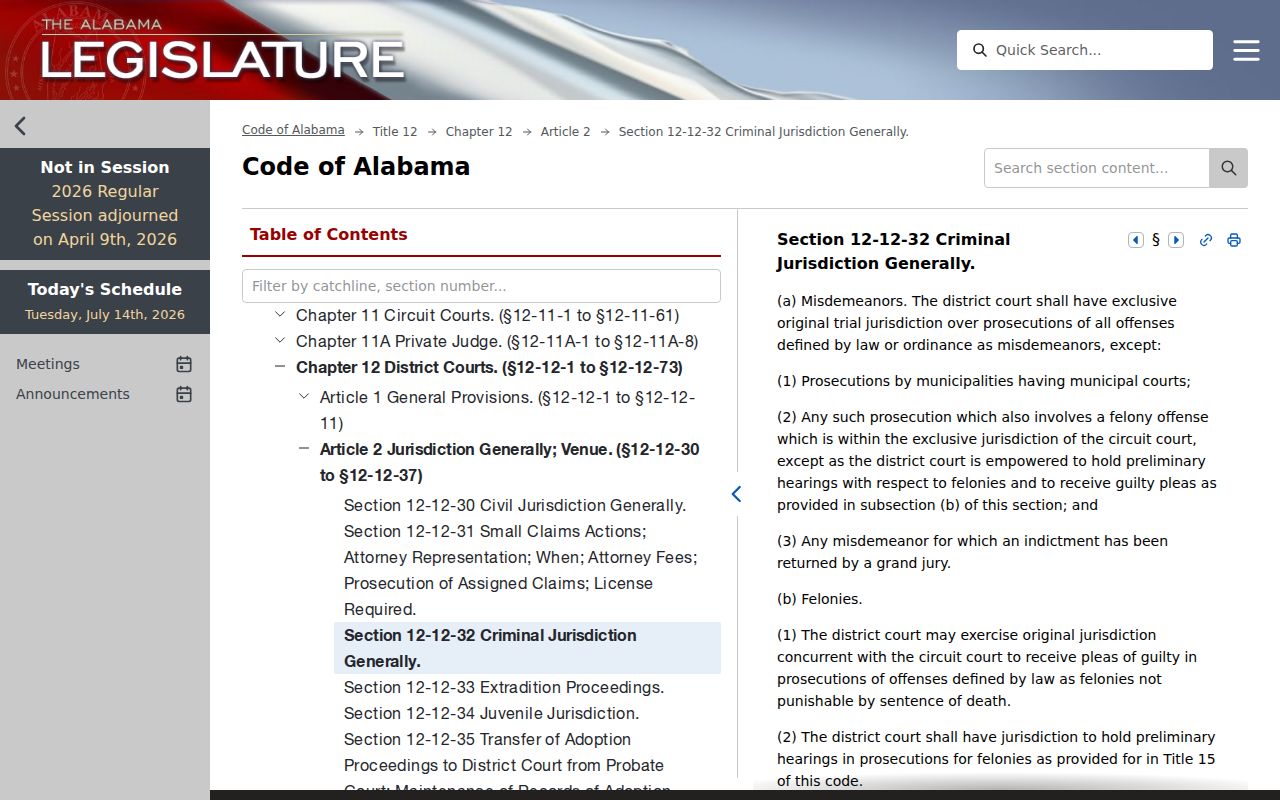
This lower-court role explains why one criminal matter can leave entries in both District and Circuit Court.
What Sumter Criminal Records Show
Fields differ by case and public-access level. Start with the identifier, defendant, court, and count. Then read the docket in date order. A current status such as pending or disposed does not explain each count by itself. The plea, disposition, and sentence must be matched to the same charge.
| Field | What It Shows |
|---|---|
| Case number | The unique trial court identifier. |
| Defendant | The person accused in the court action. |
| Court and judge | Circuit or District Court and the assigned judge when shown. |
| Charges | Offense description, statute, classification, count, and status. |
| Bond | Release amount or conditions and related court action. |
| Plea | The defendant's response to each charge. |
| Docket events | Hearings, motions, orders, warrants, and other dated action. |
| Disposition | The final result for a charge or case. |
| Sentence | Custody, probation, restitution, fines, costs, and conditions. |
Sumter Charges Versus Convictions
A charge is an accusation. It can be amended, reduced, dropped, dismissed, or end in acquittal. A conviction follows a guilty plea or finding. Searchers should not report the first charge as the outcome. Use the disposition for each count, then read the sentence only if that count produced a conviction.
| Charge | Conviction | |
|---|---|---|
| Stage | Accusation | Verdict or plea |
| Meaning | Filed allegation | Guilty plea or finding |
| Can change | May be amended, reduced, or dismissed | May later be appealed or affected by court relief |
| How to verify | Charging document and docket | Disposition and judgment |
Read Sumter Criminal Outcomes
“Guilty” records a conviction. “Not guilty” records an acquittal. “Dismissed” means the charge ended without a conviction on that count. A nolle prosequi entry reflects the prosecutor's decision not to proceed at that time. Match the outcome to the exact count because one case can have several charges with different results. A sentence may combine jail or prison, suspended time, probation, restitution, fines, costs, and conditions. Later docket entries may modify probation or show an appeal.
Sealed and Expunged Sumter Records
A seal restricts public view under a law or court order. Expungement is a statutory petition process that removes eligible records from normal public access. Neither should be described as automatic, and an expunged record is not simply a dismissed case that still appears on a docket.
| Sealed | Expunged | |
|---|---|---|
| Public visibility | Restricted by law or order | Removed from normal public access after an order |
| Agency access | May continue where authorized | Limited access may remain where Alabama law allows |
| How obtained | Court order or confidentiality rule | Eligibility, petition, service, and court order |
Alabama Code Section 15-27-1 addresses eligible non-conviction records.
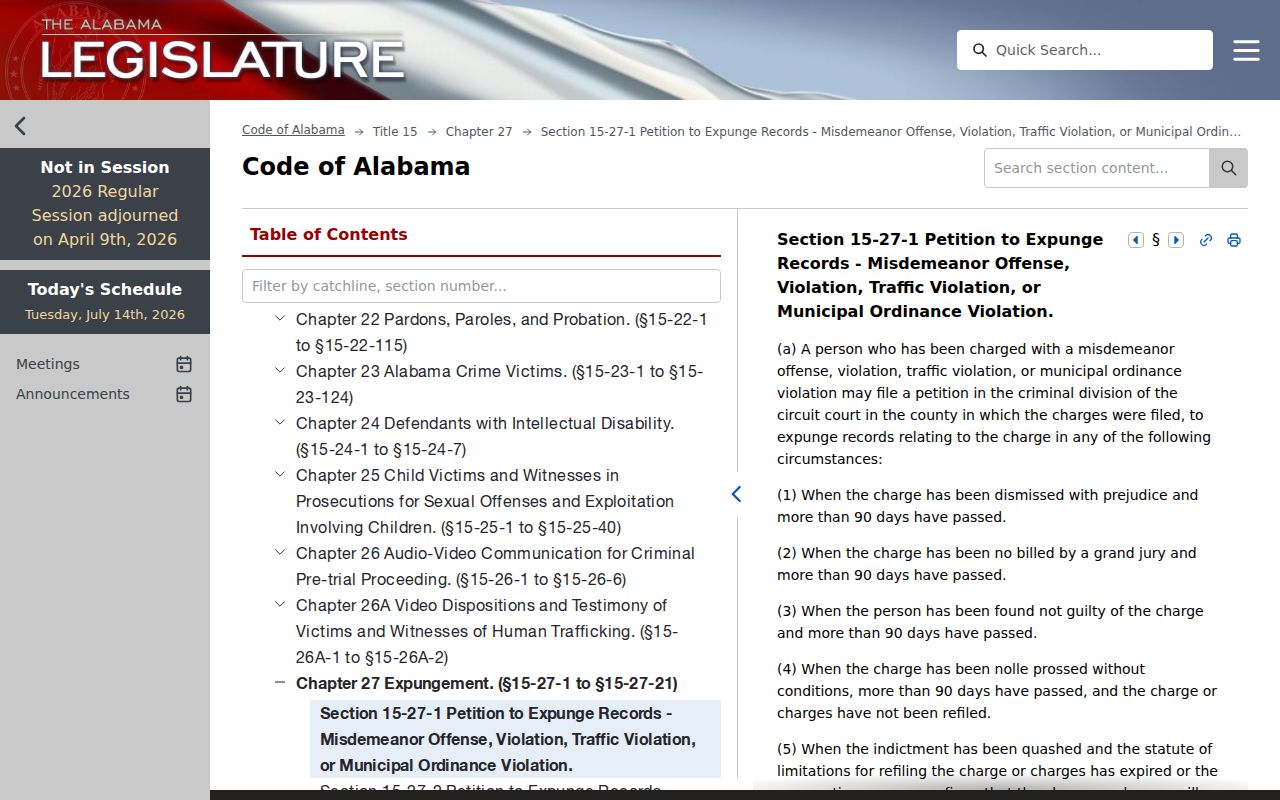
The official statute text helps distinguish expungement from an ordinary case dismissal.
Alabama Code Section 15-27-2 covers additional criminal record categories.
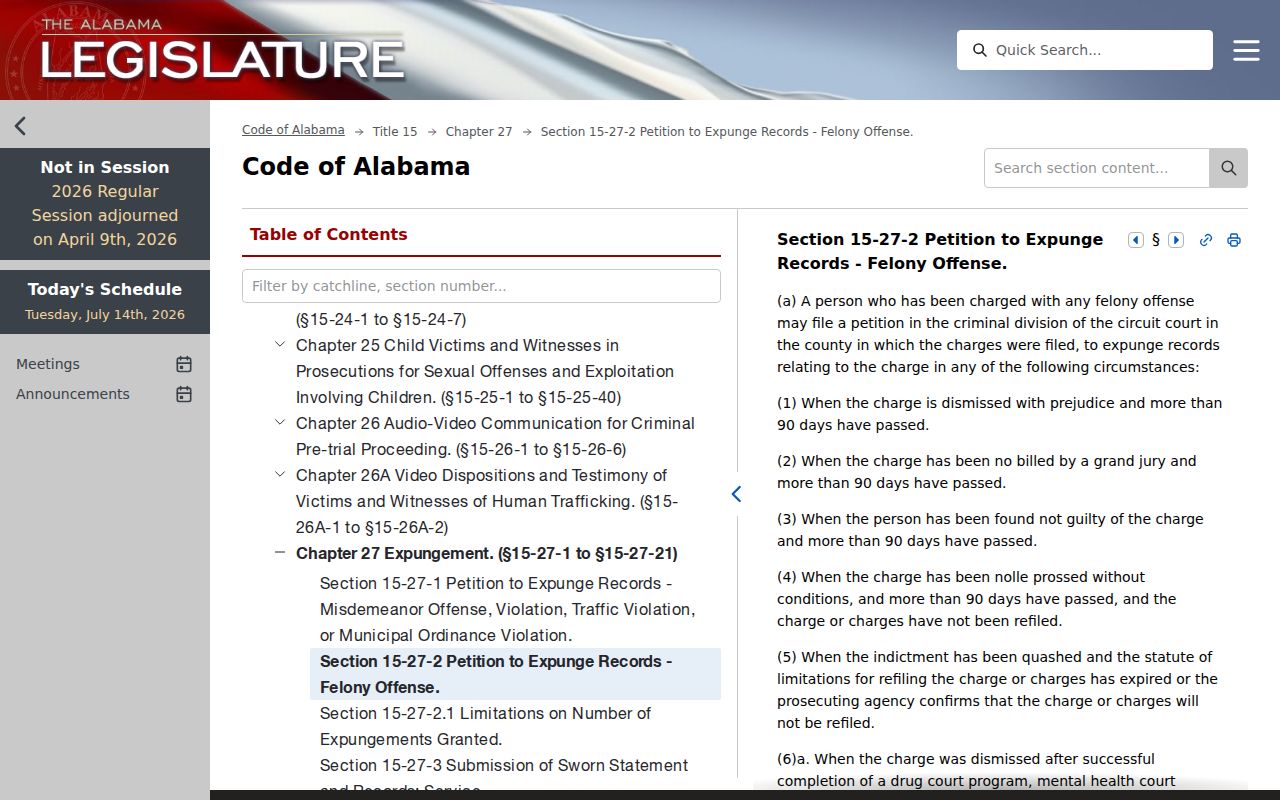
Eligibility depends on the statute and case facts, so the Circuit Clerk cannot promise that a petition will be granted.
Public Sumter Criminal Case Access
Alabama Code Section 36-12-40 supplies the general public-records framework, while court rules and confidentiality laws can limit a file. Public access commonly includes the case identity, charges, docket events, disposition, and orders that are not sealed. Documents can be redacted or unavailable online. Section 36-12-41 addresses copies and lawful charges.
Note: A public case result may omit sealed papers, protected identifiers, and documents that require payment or a clerk request.
Verify Sumter Criminal Case Results
A name-only match can point to the wrong person. Confirm the case number, court, defendant details available to the public, charge count, and final disposition. Alacourt case information is a court source, while an ALEA criminal-history search is a distinct state service. Neither an online search nor this private resource should be used as an FCRA consumer report for employment, housing, credit, insurance, or another regulated decision.
Confirm the court system as well as the person. A prosecution in the U.S. District Court for the Northern District of Alabama is a federal case and will not appear as a Sumter County Circuit or District Court file. Federal dockets and documents use PACER and CM/ECF, while federal custody uses the Bureau of Prisons locator. A state charge, federal charge, sheriff booking record, and ADOC prison record can concern the same person but remain separate records controlled by different agencies. Match the court name and case number before treating any result as part of the Sumter criminal case.
Important: Verify every result with the Circuit Clerk and use an authorized consumer reporting agency for any FCRA-regulated purpose.
Restricted Sumter Criminal Court Records
Juvenile files are confidential under Alabama Code Section 12-15-133. Access generally depends on party, attorney, agency, or court-authorized status. Sealed matters, sensitive mental-health records, protected addresses, Social Security numbers, account data, and minor identifiers can also be withheld or redacted.
The official juvenile confidentiality statute shows why juvenile cases do not appear like adult criminal records.
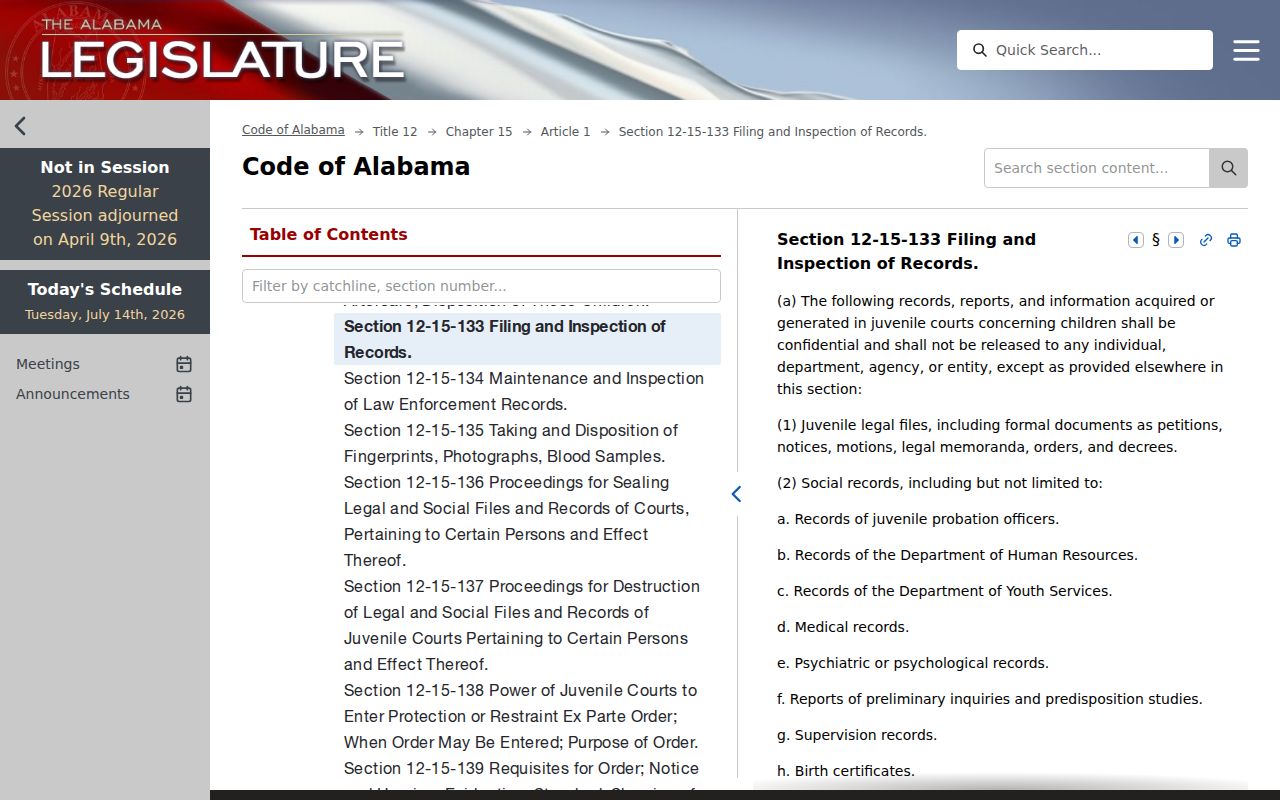
A parent, party, or attorney should ask the Circuit Clerk what authorization or court procedure applies rather than expecting open web access.
The District Attorney for the 17th Judicial Circuit is Racheal England. The official county judicial listing places that office at the Marengo County Courthouse in Linden, phone (334) 295-2219. The circuit serves Sumter, Greene, and Marengo counties. Prosecutors decide how formal charges proceed, negotiate pleas, communicate on victim matters, and appear on criminal dockets. Their office does not replace the Circuit Clerk as keeper of the court case file.
No official Sumter County public defender office page was located. A defendant who cannot afford counsel should contact the assigned court or appear as directed and request appointed counsel. The clerk can explain the request process but cannot act as counsel. A warrant or failure-to-appear entry should also be handled through the issuing court or Sheriff Brian S. Harris, not by relying only on a web result.
Traffic-related criminal entries can have their own route. Sumter District Court warns that failing to dispose of a traffic case and failing to appear may cause a warrant, license suspension by ALEA, a higher fine, and bond forfeiture. Those events can become part of the criminal or traffic docket, but payment eligibility does not apply to every offense.